Because Every Ability Deserves an Opportunity

And Every Achievement Begins with a

Intilaqa

A specialized center for psychological and educational assessment, as well as rehabilitation services, for children and adolescents from birth to 18 years of age. Providing professional, evidence-based practices grounded in scientific research.

About Us:

At Intilaqa Rehabilitation Center We believe that every child has abilities that can be developed when they receive the right assessment, the right program, and continuous support. Therefore, we offer individualized rehabilitation services built upon the needs of each case, within a supportive professional environment that strives to develop skills, enhance independence, and improve quality of life.

Our Vision:

Towards discoverable potential and a future built.

Our Mission:

To provide specialized assessment and rehabilitation services according to best professional practices, through individualized programs designed to suit the needs of each case, and in partnership with Our Family

Our Values:

• Professionalism
• Quality
• Respect
• Partnership with the Family
• Continuous Improvement

Our Services

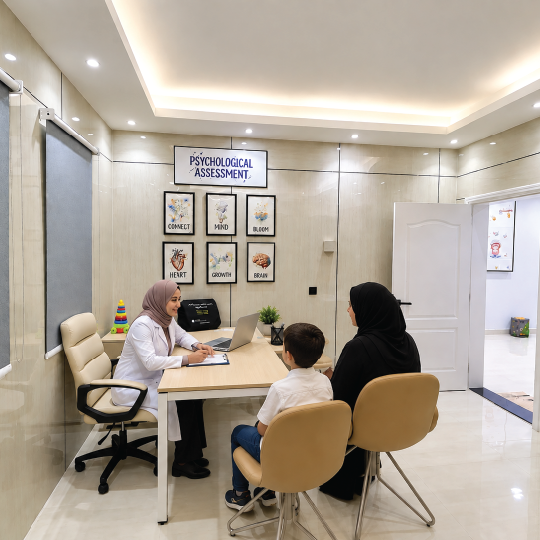
Psycho-educational assessment

A comprehensive scientific diagnosis to understand abilities and needs, and to develop appropriate recommendations for program development.
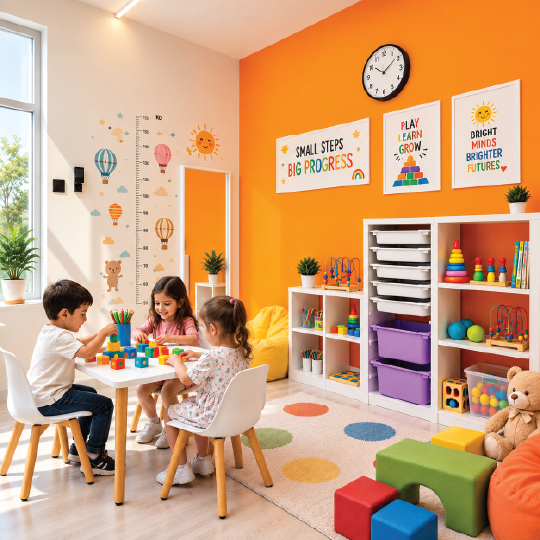
Speech and Language Therapy

The Speech and Language Therapy Program develops communication, language, and speech skills, helping children and adolescents express their needs and interact confidently through individualized programs tailored to their needs.
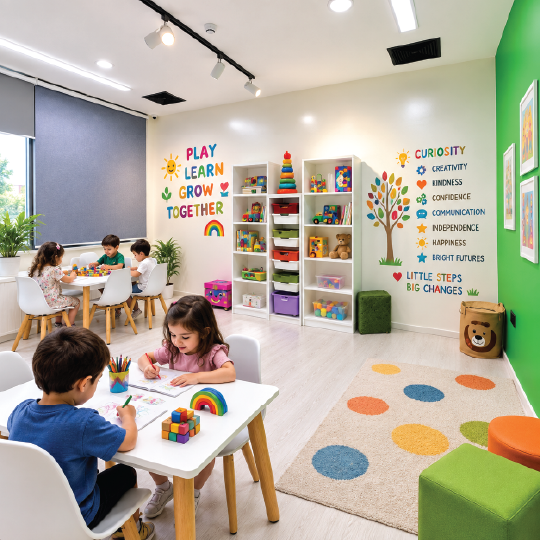
Behavior Modification

Behavior Modification focuses on developing positive behaviors and functional skills while reducing behaviors that affect learning, communication, and adaptation through individualized, evidence-based intervention programs.
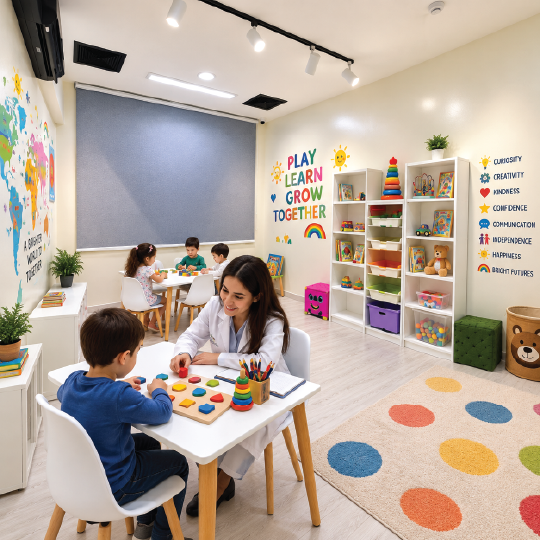
Special Education

These programs develop academic, developmental, and independence skills through individualized educational and rehabilitation plans that support learning and daily-life participation.
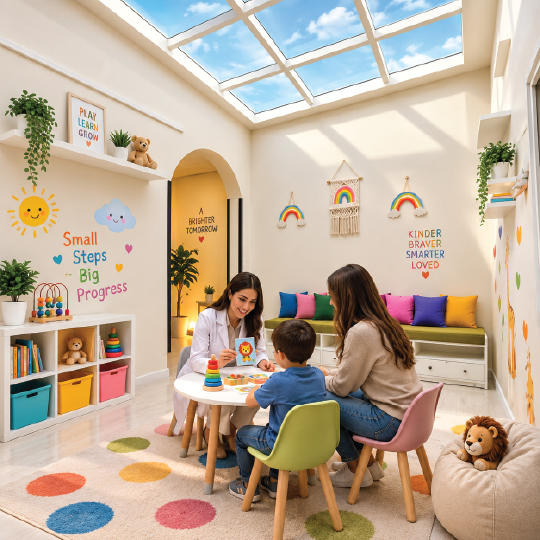
Home Services

Home-based rehabilitation provides sessions in the individual’s home when appropriate, supporting skill development and generalization through effective family involvement.
Your Journey With Us

Communication

We identify the family's needs and schedule an assessment.
Assessment

Conducting a comprehensive psycho-educational assessment using standardized tools and measures.
Individual Plan

Developing a rehabilitation program that suits the abilities and needs of each individual.
Rehabilitation Sessions

Implementing the program according to clear objectives with continuous follow-up.
Follow-up and Development

Measuring progress and updating objectives to achieve optimal results.
Why Intilaqa Rehabilitation Center?

Scientifically based psycho-educational assessment
Individualized rehabilitation programs designed according to the needs of each case
Evidence-based intervention practices and strategies
A specialized, multi-experienced team
Genuine partnership with the family at all stages of the program
Regular follow-up to measure progress and goal achievement
Family: A Partner in Success

We believe that the family is a key partner in the rehabilitation journey. Therefore, we are keen to involve parents in all stages of the program, providing guidance and continuous follow-up to help generalize skills in daily life and achieve the best results.

Psychoeducational Assessment

Psychoeducational assessment is the first step towards building a successful rehabilitation program, as it helps to understand abilities and needs scientifically, and to identify strengths and areas of support, thus contributing to the development of an individualized rehabilitation program based on accurate results and professional recommendations.

Assessment Areas

Assessment of cognitive abilities and mental functions
Assessment of growth and developmental skills
Assessment of adaptive behavior and daily living skills
Assessment of communication, language, and social interaction
Assessment of behavioral and emotional aspects
Assessment of indicators of autism spectrum disorder and developmental disorders
Preparation of a comprehensive psycho-educational report
Our assessment relies on:

• Standardized and validated psychological and educational tools and measures.
• Measures of intellectual abilities and intelligence.
• Measures of growth and development.
• Measures of adaptive behavior.
• Measures of communication and language.
• Scales for diagnosing autism spectrum disorder
• Behavioral and emotional assessment scales, including indicators of attention deficit hyperactivity disorder (ADHD).
• Diagnostic criteria based on the DSM-5-TR within the assessment framework Comprehensive Clinical.

When is an assessment appropriate?

• When a delay in development or skill acquisition is observed.
• When there are difficulties in communication or social interaction.
• When developmental, behavioral, or communication difficulties arise that require specialized assessment.
• Before starting any rehabilitation program.
• When a more precise understanding of abilities and needs is needed to make informed decisions.

Expected Impact:

• Comprehensive understanding of the individual’s abilities and needs.
• Identification of strengths and areas for support.
• Development of an individualized rehabilitation program based on scientific findings.
• Provision of professional recommendations to support the family in selecting appropriate services.

Start with the right step.

• Comprehensive understanding of the individual’s abilities and needs.
• Identification of strengths and areas for support.
• Development of an individualized rehabilitation program based on scientific findings.
• Provision of professional recommendations to support the family in selecting appropriate services.

Speech and Language Therapy

The speech and language therapy program aims to develop communication, language, and speech skills, and to help children and adolescents express their needs and interact confidently with those around them, through individualized programs designed according to assessment results and the needs of each case.

Areas of Service

Developing receptive and expressive language skills
Treating speech and articulation disorders
Developing verbal and nonverbal communication skills
Developing social communication skills
Treating fluency disorders (stuttering)
Developing comprehension and language expression skills
How do we do it?

We rely on an initial assessment to determine the language and communication level. Then, we set individualized goals tailored to the individual’s needs, with regular follow-ups to measure progress and refine the program based on the achieved results.

When is this service appropriate?

• When language or speech acquisition is delayed
• When there is difficulty pronouncing certain sounds or words
• When there are difficulties in understanding or expressing language
• When there are weak communication and social interaction skills
• When there is a need to develop functional communication skills for daily life

Expected impact

• Improving communication and expression skills
• Developing language skills appropriate to the individual’s abilities
• Enhancing social interaction and self-confidence
• Supporting participation in the family and educational environment
• Improving the quality of communication in various situations

Towards more effective communication

Communication is the foundation of learning, interaction, and relationship building, and we believe that developing its skills opens up broader horizons for growth and independence.

Behavior Modification

Behavior modification is a program aimed at developing positive behaviors and functional skills, and reducing behaviors that may affect learning, communication, and adaptation, through individualized programs built on assessment results, taking into account the needs and abilities of each case, using evidence-based intervention practices and strategies.

Areas of Service

Behavioral assessment and analysis of factors influencing behavior
Developing positive behaviors and adaptive skills
Reducing maladaptive behaviors using evidence-based intervention strategies
Developing attention, self-regulation, and behavioral flexibility skills
Developing communication and social interaction skills
Promoting independence and daily living skills
Supporting the mainstreaming of skills at home, in school, and in the community in partnership with the family

How do we do it?

We begin by understanding the behavior and analyzing the factors influencing it. Then, we set clear behavioral goals and an individualized program tailored to the individual’s needs, implementing appropriate intervention strategies and continuously monitoring progress to refine the program based on achieved results.

When is this service appropriate?

• When behaviors appear that affect learning or social interaction.
• When there is difficulty following instructions or completing tasks.
• When there are challenges with attention or behavioral regulation.
• When there is a need to develop social skills or independence.
• When there is a need for behavioral support at home or school.

Expected impact

• Developing positive behaviors and adaptive skills
• Improving attention and self-regulation
• Enhancing communication and social interaction skills
• Developing independence and daily living skills
• Improving adaptation in different environments
• Supporting families in disseminating skills and ensuring the program’s continued impact

Towards a more positive behavior... and a more independent life

We work on building skills, promoting positive behaviors, and enabling individuals to interact and adapt better in different environments, thus supporting their long-term growth and independence.

Special Education

The programs aim to develop academic, developmental, and independence skills through individualized educational and rehabilitation programs designed according to assessment results and the needs of each case, thus supporting learning and enhancing participation in daily life.

Areas of Service

Developing cognitive and perceptual skills

Developing academic and pre-academic skills

Developing attention, focus, and readiness to learn skills

Developing communication and social interaction skills

Developing independence and self-care skills

Developing daily living skills

Developing fine motor skills and visual-motor coordination

Preparing and implementing individualized educational programs according to the needs of each case.
How do we do it?

We begin by identifying the current performance level and determining educational and developmental needs. Then, we set clear individual goals and implement the program using diverse teaching strategies, with regular follow-up to measure progress and adjust goals to suit the individual’s abilities.

When is this service appropriate?

• When there is a delay in acquiring developmental or educational skills
• When there is a need to develop pre-academic or academic skills
• When there are difficulties with independence or daily living skills
• When there is a need to develop communication and social interaction skills
• To support learning and maximize the use of abilities and potential

Expected impact

• Developing educational and developmental skills
• Enhancing independence and self-reliance
• Improving the ability to learn and acquire skills
• Developing communication and social interaction skills
• Supporting active participation at home and in the learning environment

We build skills... step by step

We believe that learning is a continuous journey, and that individualized programs designed according to the needs of each case contribute to developing abilities, enhancing independence, and achieving tangible progress in various aspects of growth.

Home Services

As one model for providing rehabilitation services, this allows sessions to be conducted in the home environment when it is more suitable to the needs of the individual, and contributes to enhancing skills acquisition and supporting their generalization in everyday life situations through effective partnership with the family.

Services Provided

Special Education Sessions

Behavior Modification Sessions
Speech and Language Therapy Sessions
Family Counseling and Parent Training

Monitoring Goal Implementation within the Home Environment

How do we do it?

Home-based sessions are conducted according to an individualized rehabilitation program based on assessment results and the individual’s needs, taking into account the nature of the home environment and employing appropriate intervention strategies that contribute to achieving the program’s objectives, with continuous follow-up and guidance provided to the family.

When is this service appropriate?

• When the home environment is more suitable for implementing the rehabilitation program
• When there is a need to reinforce the acquisition of skills in everyday situations
• To support the generalization of skills outside the center
• To enhance family participation in implementing the rehabilitation program
• In accordance with the needs of the case and the rehabilitation plan

Expected impact

• Enhanced skill acquisition in natural environments
• Improved generalization of skills at home and in the community
• Increased effectiveness of family participation in the program
• Support for the continuity of training and achievement of rehabilitation goals
• Enhanced independence and self-reliance

Qualification... where learning opportunities continue

The home environment represents a natural extension of the rehabilitation process, contributing to transferring the impact of the sessions to daily life, thus enhancing learning opportunities, continued progress, and achieving more sustainable results.

Contact Us

06 886 9022

052 146 7773

intilaqa.center@gmail.com

University St - Al Jerf 1 - Ajman